
Dr. Daniela Matz
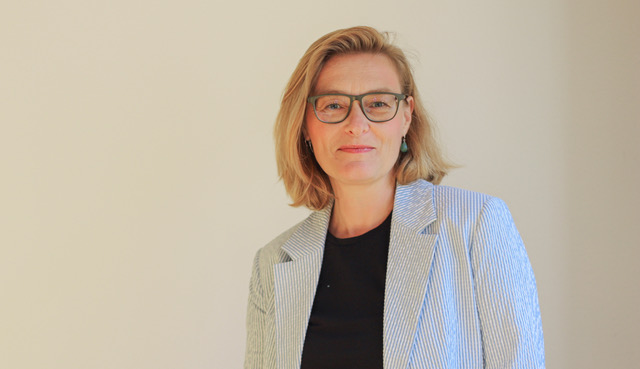
As part of the TEIFUN project, Dr. Daniela Matz will begin conducting in-depth research on literary writing incorporating generative AI at the Chair of German Philology and Didactics of German Literature at the University of Tübingen starting in August 2024. Her research will focus on fostering creativity, autonomy, and critical
reflection skills of students. Specifically, the question is how tasks and learning settings in the field of literary writing - under the auspices of a writing and reading culture shaped by artificial intelligence - can be designed to promote literary-creative design and judgment skills. For Daniela Matz, the practical relevance and transferability of her research plays a major role. After more than 16 years as a secondary school teacher of German and philosophy and her doctorate entitled "Interpretation concepts of German teachers and their pupils", which she completed parallel to her work as a teacher, she is ideally placed to link her academic work with practical issues.
About the project and the associated sub-projects:
Literary writing with artificial intelligence: New dimensions of literary-aesthetic education in secondary school German lessons
Contact:
University of Tübingen
German Seminar
Chair of German Philology / Didactics of German Literature
@ daniela.matz@uni-tuebingen.de
Project-related publications:
** Double-blind review, *Single-blind review
Articles in journals and anthologies
Matz, D. (retired). AI Writes Poetry!? On Students’ Evaluation of AI-Generated Poems. In: A. R. Hoffmann & J. Witte (eds.),Values, Valuing, and the Teaching of Values in Literature Education*
Matz, D. (2026). Confronting Artificial Intelligence with Creativity: On the Significance of Creativity as a Transitional Standard for Literature Instruction. In: L. C. Jagdschian & F. Hesse (Eds.), Literature. Artificial Intelligence. Didactics. (pp. 155–177). Königshausen & Neumann. DOI: 10.13140/RG.2.2.13634.24003
Matz, D., & Führer, C. (2026). Methodological approaches to research on writing processes in the context of AI: The example of creative and literary writing. Didaktik Deutsch. https://doi.org/10.21248/dideu.977
Abraham, U., & Matz, D. (2024). Assessing Creative and Literary Writing. In I. Petersen, R. Reble, & J. Kilian (Eds.),Writing Texts in All Subjects: Text Assessment as a Foundation for Writing Instruction and Performance Evaluation(pp. 199–219). Waxmann.**
Matz, D. (2023). Literary Writing in Learning Groups with Heterogeneous Starting Levels. In: U. Abraham, C. Bräuer & T. von Brand (Eds.),Creative Writing as a Cultural Practice: Insights from German Language Pedagogy, Writing Instruction, and Media Culture for the Classroom ( pp. 174–186). Klett/Kallmeyer.
Practical contributions
Matz, D. & Krmpotić, A. (forthcoming). Our Lyric Masterpieces. An Oral Exam Format for Reflecting on Literary Writing Processes and Products. In: Praxis Deutsch 321.
Matz, D. & Führer, C. (2025). Poetic Algorithms? Reflections on Poetry in the Age of Artificial Intelligence. In: Florian Hesse/Gerrit Helm (Eds.),Artificial Intelligence in German Language Instruction Beyond Text Production. (SLLD-U Special Issue)** DOI:https://doi.org/10.46586/SLLD.442
Fürstenberg, M. & Matz, D. (2025). Artificial Intelligence as a Discussion Partner? Evidence-Based Argumentation and Reflection on AI. In:Praxis Deutsch 311, pp. 23–30.
Matz, D. (2024). How I Became Who I Am. Real People—Fictional Stories. In:Deutsch 5-10: Fanfiction, 79, 8–12.
(Reprinted in:Teaching Outside One’s Specialty. Schulmagazin 5-10. Ideas for Creative Teaching. 5/2025, 10–19)
Matz, D. (2022). Improvising—Writing—Performing: Developing Original Adaptations of the Popular *Romeo and Juliet* Story. In:*Praxis Deutsch* 293, pp. 39–47.
Abraham, U., & Matz, D. (2020). Improving Drafts Through Critique: Literary Writing and Revision as a Collaborative Task.In*Praxis Deutsch* 279, pp. 21–27.
Poster presentations, lectures and panel discussions
Coming soon:
01/2027 Distant and uncreative writing? Reconstructing and modeling the literary writing processes of adolescents using AI ( University of Wuppertal)
past lectures:
September 2026: Panel chair at the 26th Symposium on German Language Teaching at the University of Halle-Wittenberg, co-chaired with Mischa Mangel: “Empirical Perspectives on Creative and Literary Writing”
03/2026 Between Originality and Orientation: On the Creativity of Literary Drafts by Adolescents ( 40th Conference of the Media Working Group “Creativity and Mediality”)
01/2026 Challenges in Theory Construction within the Grounded Theory Paradigm. Methodological Discussions Using the LiSKIDS “Thinking Aloud” Study as an Example(Digital Seminar Series “Young Empirical Research in Literature Didactics,” Winter Semester 25/26, University of Siegen)
10/2025 Writing stories, assessing texts: Task formats, conversational practices, and criteria for text assessment in literary writing (Symposium "Literatur- und mediendidaktische Profilierung von Schreibaufgaben", AQUA-d Conference, Pädagogische Hochschule Karlsruhe)
09/25 Panel presentation at the 28th Germanists' Conference, together with Maurice Fürstenberg: "Vom Dialog zum Trilog? Interdisciplinary perspectives on conversations with artificial intelligence"
09/25 - Conversations with people and machines in literary writing settings. On the promotion of a literary-aesthetic reading attitude [working title]
(28th Germanists' Conference, panel "From dialog to trialogue? Interdisciplinary perspectives on conversations with artificial intelligence", chaired by: Daniela Matz, Maurice Fürstenberg)
03/2025 Poster presentation of LiSKIDS01: Literary evaluations of students at the end of lower secondary level in literary writing processes with and without artificial intelligence
Conference of the Media Working Group on the topic: "DU trifft KI. Implications of artificial intelligence for language, literature and media didactics in German"
09/24 - On the evaluation of AI-generated poems by female pupils (KIdichtet!?)
(SDD 24, section "Values and the teaching of values as a cross-sectional task in German lessons", chaired by Anna R. Hoffmann, Jennifer Witte)
09/24 - On the relativity and normativity of the concept of creativity in German didactics and its related disciplines using the example of creative writing
(SDD 24, Panel "Normativity and Relativity in German Didactics and Teaching", Chair: Philipp Marzusch, Dominik Balg, Carolin Führer)
07/23 - Literary writing based on Georg Büchner's "Woyzeck". Insights into an AI-supported writing project in German lessons at the upper secondary school level
(Conference "DeutschGPT - Deutschunterricht in Zeiten von Chatbots und KI" at the LMU Munich) To the Book of Abstracts