
Dr. Kensuke Akao
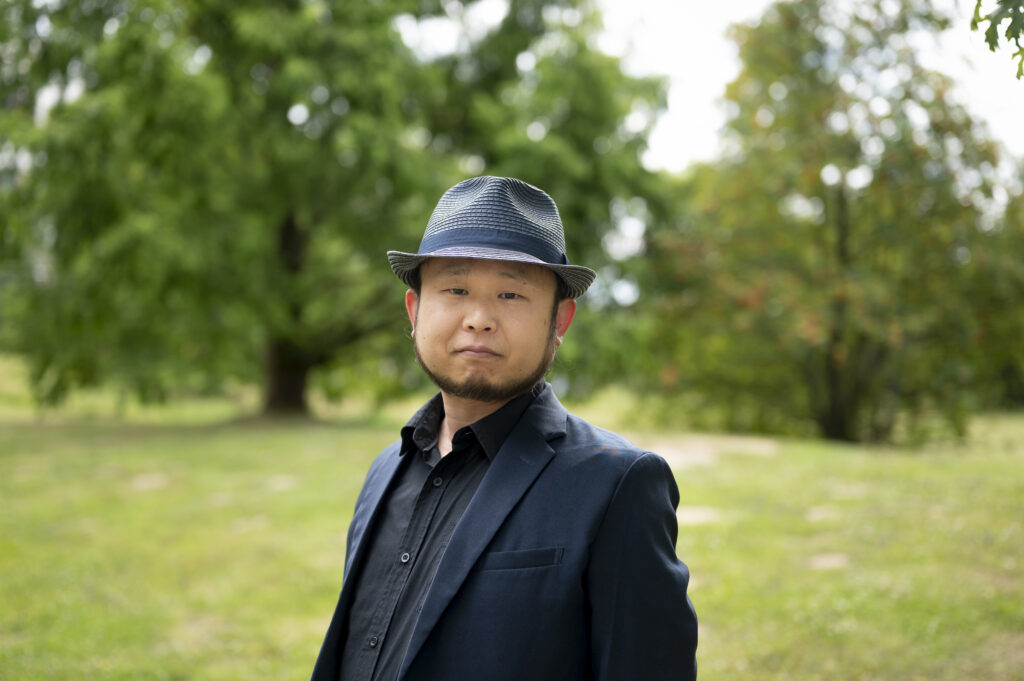
After completing his Master's degree at Tokai University in Japan, Dr. Kensuke Akao worked for seven years at Kyoto University as a technical assistant before coming to Germany in 2015 to work at the University of Münster on the study "Harmonizing the strengths of e-learning and face-to-face courses in the context of
Teacher training in computer science". He gained further research experience at TU Dortmund University, where he researched inclusive computer science teaching. As part of TEIFUN, he works on the I-KASA project, which bridges the gap between the University of Stuttgart and the Ludwigsburg University of Teacher Education. In Stuttgart, he works not only at the Institute of Educational Science, but also at the Institute of Software Engineering; at the Ludwigsburg site, he is based at the Institute of Computer Science. Dr. Kensuke Akao's research focuses on strengthening integration and inclusion in schools. Against this background, he will explore the potential and limitations of AI in the context of TEIFUN to reduce language barriers for pupils with a non-German native language. In addition to his experience with the development of digital media and assistive technology, he will also draw on his scientific expertise in approaches to inclusive computer science teaching, combining aspects of information technology and educational science.
Project:
I-KASA - Computer science lessons using AI applications for school children from abroad
Contact:
University of Stuttgart
Institute for Educational Science and Institute for Software Engineering
@ kensuke.akao@iste.uni-stuttgart.de
Ludwigsburg University of Edcuation
Institute for Coumputer Science
@ kensuke.akao@ph-ludwigsburg.de
Project-related publications:
Akao, K. (2026). Transfer of the NRW Seminar Concept for Raising Awareness of Inclusion in Computer Science Teacher Education in Baden-Württemberg. In Opel, S., Kather, P. (Eds.), 12th Symposium on University Didactics in Computer Science (HDI) 2026. pp. 87–96. (DOI: 10.5281/zenodo.22255666)
Akao, K. & Tempel, T. (2026, in press). Available Mental Resources and Long-Term Retention in Adaptive Worksheet Creation: Cognitive Offloading Costs of Using Gen-AI for Non-Teaching Tasks. The 23rd International Conference on Cognition and Exploratory Learning in the Digital Age (CELDA 2026), Lisbon (Portugal).
Akao, K. (2026, in press): An inclusion-oriented teacher education program integrating disability awareness-raising: A case study of computer science didactics in Germany. In Ikuta, S. et al. (eds.), Instructional Tools and School- and Community-Based Collaborative Activities for Exceptional K-12 Students. IGI Global.
Akao, K., Hasnine, M. N., Yamada, M., & Ueda, H. (2025). Human Perceptions of AI-Generated Images and AI-Assisted Sentence Corrections: Analyzing Learners’ Contextual Vocabulary Learning Behaviors with an AI Chatbot. The 22nd International Conference on Cognition and Exploratory Learning in the Digital Age (CELDA 2025), Porto (Portugal), pp. 103–110.
Hasnine, M. N., Yamada, M., Ueda, H., & Akao, K. (2025). Understanding learners’ perceptions of a generative AI-enabled system for personalized contextual vocabulary learning, International Conferences on e-Learning and Digital Learning 2025 (EL DL Learning 2025), Lisbon (Portugal), pp. 137–144.
Akao, K.: “AI-Based Support for Breaking Down Language Barriers for Children Whose Native Language Is Not German.” The 22nd Symposium on Educational Technologies of the GI Educational Technologies Section (DELFI) 2024, Fulda 2024, pp. 467–472. (DOI: 10.18420/delfi2024_43)